Travelling to a Wedding in Prague: A Guest Guide
A coordinator's guide for guests travelling to a wedding in Prague: airport transfers, getting around, where to stay, what to wear, gifts and RSVP etiquette.
If you're reading this, you've probably been invited to a wedding in Prague — and the couple sent you this link so you can arrive relaxed and prepared. I've been coordinating weddings in Prague since 2017, and I see every time how much depends on the guests: whether they replied on time, found their way, wore the right shoes. So I've put everything guests usually ask me in one place, from the airport to the word "děkuji". Couples: feel free to send this guide to your guests along with the invitation.
Getting to Prague and from the airport into town
Václav Havel Airport sits on the western edge of the city, and the journey to the centre usually takes 30–40 minutes. You have a few options:
- Bus 119 to the metro — the cheapest way: the bus runs to Nádraží Veleslavín metro station, and the green line A takes you straight into the centre. Buy your ticket from the machine or in the app before you board
- Airport Express — a direct bus to the main railway station (Hlavní nádraží). Handy if your hotel is near the station or you're continuing by train
- Taxi or ride-hailing app — the most comfortable choice with luggage or late at night. Order a car through an app, or agree the price before you get in. I don't recommend jumping into the first taxi outside the terminal without a fixed price
If you arrive by train or coach, both the main station and the Florenc bus terminal have their own metro stations, so getting anywhere from there is easy.
Getting around the city
Prague is compact, and the centre is best explored on foot. For longer distances there's the metro (three lines), trams and buses — all on a single ticket system.
- Tickets are time-based, not per ride: 30 or 90 minutes, 24 hours or three days. Within that window you can change as often as you like
- The easiest way to buy is the Lítačka app, or tapping a contactless card on the validator in trams and metro stations. A paper ticket must be stamped before you travel
- Trams run through the night, so getting home after the reception is usually simple
- Cobblestones are everywhere. Old Town, Malá Strana, the Castle district — it's all stone. Comfortable shoes matter even for a short walk, and stilettos on cobbles are a risk to both the heels and your ankles
Where to stay
The right neighbourhood depends on what you want from the trip:
- Old Town and Malá Strana — the most atmospheric option: everything within reach, evening walks along the Vltava, views of the Castle. Also the busiest and the priciest
- Vinohrady and Karlín — quieter, residential neighbourhoods full of cafés and parks, 10–15 minutes from the centre by metro or tram. Usually better value for the same standard
- If the couple named a recommended hotel or area in the invitation, go with it — it's often close to the venue or on the transfer route
Book early, especially for summer and December — Prague fills up with visitors in those months, and the good options disappear fast.
Money: koruna, cards and tipping
The Czech Republic uses the Czech koruna (Kč), not the euro. A few practical things that will save you money and nerves:
- Cards are accepted almost everywhere — cafés, trams, even farmers' markets. You won't need much cash
- If a card terminal offers to charge you in euros, choose koruna: your own bank's conversion is almost always the better rate
- Avoid the street exchange booths in the centre — behind the promise of "0 % commission" there's often a very poor rate. Withdraw from a bank's ATM or use a reputable exchange office
- Tipping is around 10 % in restaurants when the service was good. You usually tell the waiter the total you'd like to pay, or round up
What to wear to a wedding in Prague
The question I get most often from guests. The dress code depends on where the wedding takes place and the time of year.
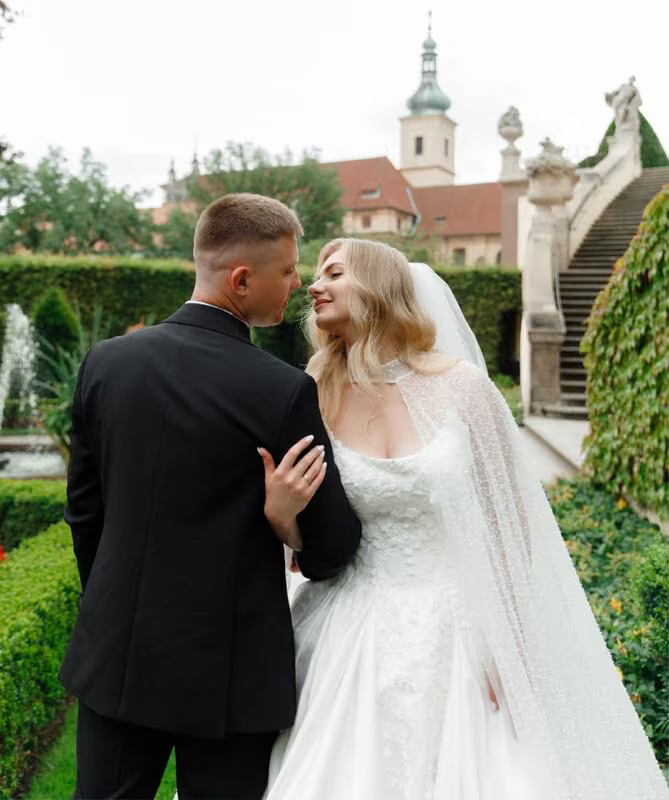
- Castle, palace or historic hall — elegant and formal: a long or midi dress, a suit with a tie. For venues like these, couples usually state the dress code on the invitation
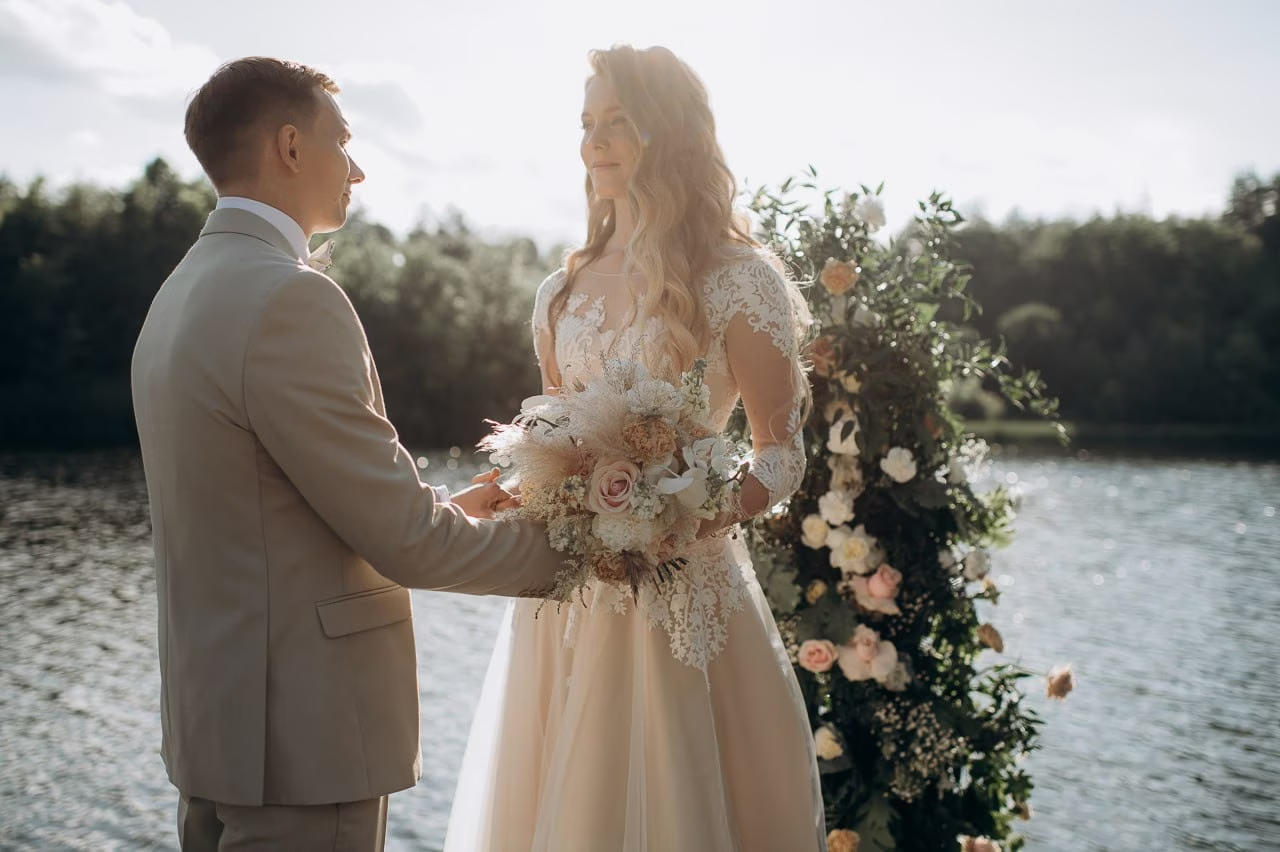
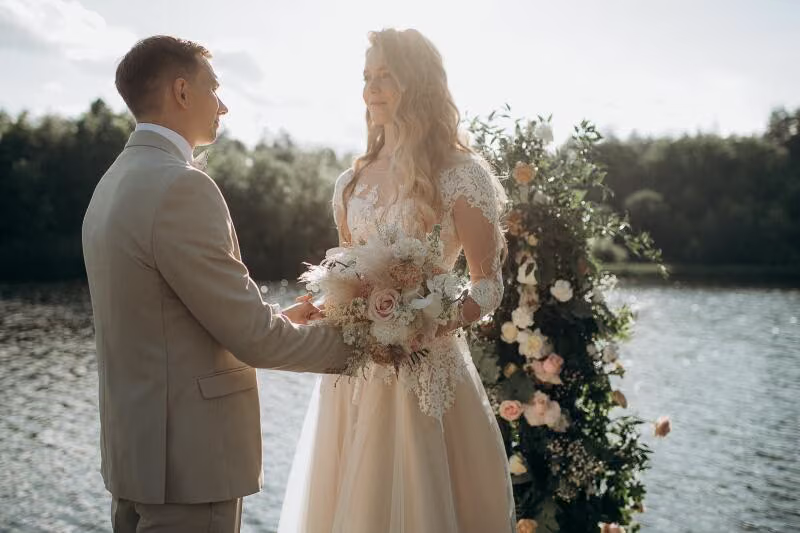
- Garden, vineyard or countryside villa — lighter and more relaxed: natural fabrics, a light suit, no tie needed. Remember the grass and gravel
- Restaurant or loft in the city — cocktail attire, somewhere between the two
- Spring and autumn — Prague weather is changeable, so layers are essential: a jacket, a light coat, a shawl. Evenings can be cold even in May and September
- Summer — it can be genuinely hot; pick breathable fabrics and bring a wrap for the evening: terraces and riverside venues cool down after sunset
- Shoes — flats, low sandals or block heels. If stilettos are non-negotiable, bring a second pair for walking and dancing
When in doubt, ask the couple. In my experience it's far better to ask in advance than to feel out of place all evening. And the usual rule applies: leave white to the bride.
Planning a wedding in Prague and want your guests looked after?
From transfers and hotels to seating and timing — I take care of guest logistics so that on the day you only have to think about each other. Write to me and we'll talk through your plan.
Gifts: what's customary
In Czech, Ukrainian and Russian traditions, the most common wedding gift is money in an envelope with a card. This is normal and expected: couples often live abroad or are saving for a trip, and it's simply the most practical gift. If you'd rather give an object, ask whether there's a wish list.
- The envelope is usually handed over in person during the congratulations after the ceremony, or placed in a dedicated box at the reception — the coordinator or the witnesses will point you to it
- Large gifts are best avoided, especially if the couple are flying home
- The simplest rule: ask the couple or whoever is organising the wedding. Nobody will mind
For more on what to expect at the celebration itself, read my post on Czech wedding traditions.
RSVP and dietary needs: why it matters so much
A request from me as a coordinator: reply to the invitation on time, even if the answer is no. Everything depends on the guest count — the number of tables, the seating plan, the catering order, the transfers, even the chairs at the ceremony. One guest who "hasn't decided yet" a week before the wedding means several plans redone.
- Reply by the date given. If your plans change after you've replied, say so straight away
- List any dietary restrictions and allergies: vegetarian, gluten- or lactose-free, nut allergies. The kitchen cooks from the list, not on the spot
- If you'd like to bring a child or a partner who isn't named on the invitation, check with the couple first
- Write your name the way it should appear on the place card
The wedding day: how it usually goes
So you feel confident on the day, here are a few things I ask of guests at every wedding:
- Arrive 20–30 minutes before the ceremony. A guest walking in during the vows is a moment we all want to avoid
- Phones away during the ceremony. There's a professional photographer for the pictures, and they'd rather not see twenty raised screens in the frame. After the ceremony, take as many as you like
- Follow the coordinator's cues. My team or I will tell you when to move to the tables, when the group photo is happening and where the transport is waiting
- Use the transport the couple arranged. If the wedding is outside the city, the guest bus isn't optional, it's part of the plan: a taxi may not find the venue, and may not come to collect you afterwards
- Czech weddings run late — dinner, dancing, often a midnight snack. Eating something before the ceremony and packing comfortable shoes for the evening are both good ideas
If you'd like to understand how the day is built, I've described a wedding day timeline in detail.
A few Czech words that help
Prague is a tourist city and you'll manage in English almost everywhere. But a few words of Czech always earn a smile:
- Dobrý den (DOH-bree den) — good day, the universal greeting
- Děkuji (DYEH-koo-yi) — thank you
- Prosím (PROH-seem) — please; also the reply to "thank you"
- Na zdraví (nah ZDRAH-vee) — cheers! Look the other person in the eye as you clink glasses — in the Czech Republic that matters
- Na shledanou (nah SKHLEH-dah-noh) — goodbye
Czech is a Slavic language: if you speak one, you'll recognise many words without a dictionary, although some mean something quite different from what you'd expect.
How a coordinator looks after guests on the day
Many guests don't realise there's someone at the wedding whose job is specifically them. Throughout the day, my team or I:
- welcome guests at the venue and show them where the ceremony, the cloakroom and the toilets are
- answer any question, from "where am I sitting" to "where's the nearest pharmacy"
- make sure the transfers leave on time and nobody is left behind
- check that the kitchen knows about every allergy and diet from your RSVPs
- solve small problems quietly, without involving the couple: a lost bag, a spilled glass, a child who needs a nap
There's more about this work in what a wedding coordinator does. And if you've started looking at venues yourself, my overview of where to get married in Prague is a good place to begin. Other common questions are answered on the FAQ page.
Prague is a wonderful city for a wedding, and I hope you have a few unforgettable days here. Arrive a little early, walk the city, wear comfortable shoes — and enjoy the celebration.
Planning a wedding in Prague?
Send this guide to your guests and leave the rest of the logistics — transfers, hotels, seating, timing — to me. Write to me and we'll start with a free consultation.