Destination Wedding in Prague: Planning From Abroad
How to plan a destination wedding in Prague from abroad: a realistic timeline, how many trips to make, vendors, guests, currency and what a coordinator handles.
Most couples I work with plan their Prague wedding from another country — London, New York, Tel Aviv, Kyiv, Berlin or Vienna. It's the usual case, not the exception. But it has its own rules: what to do early, how many trips to make, how to work with vendors you've only met on a video call, and what can be done remotely. This is what I usually explain to couples in our first consultation.
Why Prague Works as a Destination Wedding City
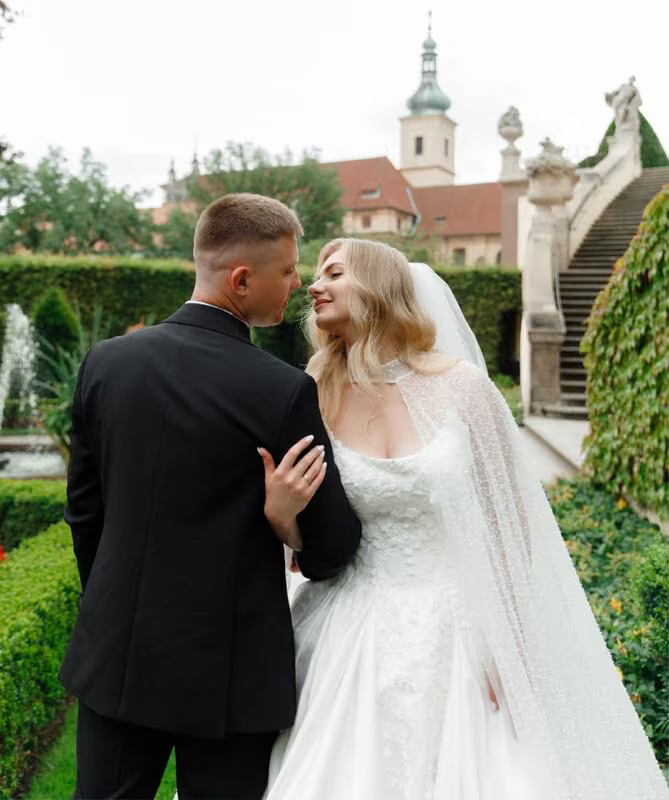
Prague sits in the centre of Europe, which makes it convenient for guests from different countries. There are direct flights from most major European cities, the UK and Israel; from the US it's usually one connection. But there are other reasons couples choose it:
- A compact centre. Ceremony, portraits and reception can all be within walking distance. Guests don't need to rent a car — taxis and public transport are enough.
- Plenty of venue types. Castles, gardens, palaces, riverside terraces, restaurants with their own courtyards — I've put together an overview of where to get married in Prague.
- Four languages. I work in English, Ukrainian, Czech and Russian. For a wedding with guests from three countries, that means everyone gets information in a language they understand.
- Guests turn it into a trip. For many of them it's a first visit to Prague, so the wedding weekend becomes a small holiday.
A Realistic Timeline: 12–18 Months
From abroad, everything takes a little longer than it seems: you can't "pop in" to look at a venue or walk into the registry office with a question. So I suggest planning in this order:
- 12–18 months out — date and venue. Popular venues on Saturdays from May to September go a year or more in advance. Date first, then two or three venue candidates, then the booking.
- Right after booking — paperwork. This is the longest and least predictable process: documents need translations and apostilles, and every country has its own processing times. What you need and in what order is in a separate article on wedding documents — I'll only say here: start earlier than feels necessary.
- 6–9 months out — key vendors. Photographer, catering or restaurant, music, florist. This is also the window in which to plan your visit to Prague.
- 3 months out — the details of the day. The wedding day timeline, seating plan, transfers, final menu, guest information.
- The final month — confirmations. Final guest count, final payments, and a second check of times and addresses with every vendor.
With less time it's still possible — the choice will just be from what's available rather than from what you like most.
How Many Trips to Prague You Need
One visit is enough for most couples. Two is comfortable. More than that, in my experience, isn't needed when someone on the ground is checking things for you. The best time to come is once the date is fixed and you have two or three venue candidates: one day is then enough to see them and decide.
What to do on the visit day:
- Walk the venue with its manager: where the ceremony goes, where the dinner goes, where guests wait, where everyone hides if it rains
- Menu tasting — hard to replace with a video call
- Hair and make-up trial, if your stylist is already chosen
- Meet the photographer or florist in person, if you'd like a feel for them beyond a screen
- Walk the route of your portrait session — you'll see how long it really takes
What can comfortably be done remotely:
- Meeting vendors and discussing the concept — video call
- Choosing decor and flowers — from mood boards and photos of previous weddings
- Approving the menu, timeline and seating — in a shared document
- Signing contracts — electronically; payments — by bank transfer
The second visit, if there is one, often coincides with arriving for the wedding itself: you fly in three or four days before the date, and in that window we meet the vendors, walk through the timeline and rehearse the ceremony.
Planning a Prague wedding from another country?
Write to me — I'll tell you where to start in your situation and what can be done remotely right now. The first consultation is free.
Working With Local Vendors From Abroad
Most of the Czech vendors I work with communicate in English. But contracts, invoices and terms are often written in Czech, and the unpleasant surprises hide in the details. What to watch for:
- Contract wording. What exactly the price includes, how many working hours, what happens with overtime, cancellation and postponement terms. Someone has to read the Czech text carefully — usually that's me.
- Deposits and payments. Usually in Czech crowns or euros, by bank transfer. From the EU that's a SEPA transfer; from elsewhere it's SWIFT — allow a few days for the money to arrive and for the bank fee.
- Instagram is not a reason to book. Ask to see one full wedding, not ten best frames. Ask what happens if the vendor falls ill.
- One communication channel. Email or a single shared chat where every agreement is in writing. Nobody will remember a "we agreed on the phone" six months later.
Guest Logistics
For your guests this is a trip abroad too, and they need information earlier than you'd think.
- Block-book rooms in one or two hotels near the venue. Hotels usually hold a block until a cut-off date, after which unbooked rooms go back on sale.
- Send a welcome message or page a few months ahead: how to get in from the airport, addresses, dress code, the weekend plan, the coordinator's contact. I've put together a ready-made guide for guests of a Prague wedding — you can simply forward it.
- A transfer on the wedding day, if the venue is outside the city. In the centre taxis are enough, but a group of forty is better moved by coach.
- One contact person for guests on the ground — not you. On the wedding day you don't want calls about a lost umbrella.
Budgeting in a Different Currency
You count in pounds, dollars, shekels or hryvnia, and the invoices come in crowns and euros. Over a year or eighteen months the exchange rate moves, and that's a real cost that's easy to miss.
- Keep the budget in the currency you pay in, and add a column in your home currency for reference
- Build in a buffer of a few percent for exchange-rate swings and bank fees
- Plan large payments ahead so you're never transferring in a hurry at a bad moment
- I've broken down the cost structure and what makes up the total in my article on the cost of a wedding in Prague
Time Zones and a Communication Rhythm
London is one hour from Prague, Israel one hour, the US East Coast six. None of that is a problem if there's a rhythm. This is what I usually suggest:
- A weekly call at a fixed time — 30–40 minutes where we go through status and the decisions for the coming week
- One shared document — budget, timeline, vendor list with statuses, guest list. One source of truth instead of twenty chats
- Urgent things by message, everything else waits for the call. That way you don't live in a wedding chat for a year
- Decisions in writing right after the call — a short summary
What a Coordinator Does When You're Abroad
The simplest way to put it: I'm your eyes, hands and voice in Prague. I've written separately about what a wedding coordinator does in general; for a couple abroad, this part matters most:
- I go to the venue and look at it through your eyes: where the arch will stand, whether the far tables can see the dance floor, where the rain will go
- I meet vendors in person and check that the Instagram promise matches reality
- I read contracts in Czech and clarify the wording before anything is signed
- I receive deliveries — decor, printed materials, guest gifts — and store them until the day
- On the day itself I run the timeline, manage the vendors and solve problems before you hear about them
For couples planning from abroad in particular, I offer full coordination: from the venue search to the last guest getting into a taxi.
Common Mistakes When Planning From Abroad
- Booking vendors from Instagram alone. A beautiful feed guarantees neither punctuality nor a plan B.
- Underestimating the paperwork. Translations, apostilles, requests to authorities in two countries — these take weeks, not days.
- Going quiet until the last week. Guests who don't know how to get there or where to stay will start messaging you at the worst possible moment.
- No plan B for the weather. Every outdoor ceremony needs an indoor option agreed in advance.
- Trying to settle everything in one trip. One day is for viewing and deciding — not for a tasting, a hair trial, five meetings and a city walk all at once.
- Budgeting in your home currency with no buffer. The exchange rate doesn't stand still.
A Final Word
A Prague wedding from another country isn't a feat — it's a project with a clear structure. Everything that needs a physical presence fits into one or two visits; everything else happens from home, at a convenient time, with someone on the ground. Most of my couples see their venue for the second time on the wedding day itself — and that's fine, as long as the work was done before.
If you're at the stage of "we'd love Prague but don't know where to start" — that's where everyone starts. Write to me and we'll go through your case: the date, your country, the guest count, and what can be done this week.
Ready to begin?
Tell me about your plans — and I'll explain how to organise a wedding in Prague without living in Prague. The first consultation is free.